
The Ultimate Guide to Islamic Mortgages: Everything You Need to Succeed with Sharia-Compliant Finance
- June 4, 2026
- Posted by: smfinance
- Category: Business plans
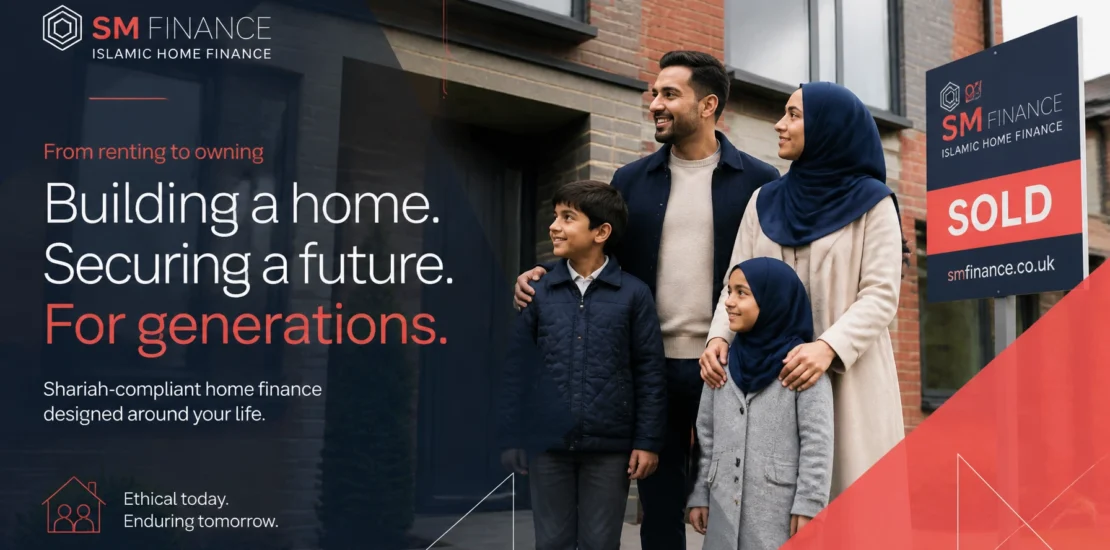
A Story So Many Families Quietly Carry
Amina and Yusuf had done what many careful couples do. They saved consistently, avoided unnecessary debt, and spent evenings scrolling through property listings, imagining where their children would grow up. On paper, they looked ready. In reality, they felt left behind.
Around them, friends were buying homes through conventional mortgages. Families were talking about extensions, school catchments, and house prices rising year after year. Meanwhile, Amina and Yusuf stayed in rented homes that never fully felt like theirs, not because they were careless with money, but because they did not want to cross a line their faith had clearly drawn around Riba.
Every time the conversation turned to buying a home, the same question came back: Are we supposed to choose between our faith and our children’s future? That was the real pain. It was not only about missing out on bricks and mortar. It was the fear of never building stability, never creating something lasting, and never being able to pass down a sense of security to their children.
That struggle is exactly why so many people start looking into Islamic mortgages in the first place. And it is also why Selina Manir has become such a trusted face in this space. This is not just about finance products or paperwork. It is about understanding what it feels like to watch the property market move on while you stand still, trying to stay true to your values. For many clients, homeownership is tied to faith, family, dignity, and the hope of building a legacy without stepping outside Islamic principles.
At SM Finance, that “why” matters. Nobody should have to choose between their faith and their family’s financial security. People do not come to us only because they need access to a Home Purchase Plan. They come because they want someone to understand the hesitation behind their questions, the family conversations behind the numbers, and the quiet worry that they may be left renting forever unless they compromise.
What is an Islamic Mortgage?
In simple terms, an Islamic mortgage is not technically a mortgage in the conventional sense. In the UK, it is usually structured as a Home Purchase Plan (HPP). Instead of a lender giving you money and charging interest on that loan, the finance is arranged in a Sharia-compliant way that avoids Riba (interest).
That distinction matters deeply to families like Amina and Yusuf. They were not just comparing rates. They were trying to understand whether there was a way to buy a home, stop feeling left behind, and still remain faithful to what they believed.
In a traditional mortgage, the bank lends money and profits through interest. In Islamic finance, the arrangement is based on a tangible asset, such as the property itself. Depending on the structure, the provider may co-own the home with you, buy it and sell it to you at a known profit, or lease it to you over an agreed term.
Why the Structure Matters
The core difference is this:
- Conventional Mortgages: Debt-based. The lender profits from charging interest on the money borrowed.
- Islamic Finance: Asset-based. The provider’s return comes from rent, co-ownership, or an agreed profit on the property transaction.
For families who want their home purchase to reflect their faith, this is not a technical detail. It is the foundation of the decision, because the goal is not simply to own a house. It is to create stability and a legacy without compromising on what is halal.
Three Sharia-Compliant Paths to Homeownership
As Amina and Yusuf discovered, there is no single one-size-fits-all model. The right route depends on your circumstances, the property, and the provider. The three main structures used in the UK are Diminishing Musharaka, Murabaha, and Ijara.
1. Diminishing Musharaka (Co-Ownership)
This is often the structure that gives families the greatest sense of reassurance because it is built around partnership. For Amina and Yusuf, this was the moment things started to click. Instead of feeling like they were taking on an interest-based loan, they could see a model where they were gradually increasing their ownership in the home.
Under Diminishing Musharaka, you and the provider buy the property together.
- How it works: If you put down a 10% deposit, the provider may fund the remaining 90%. You own your share from day one, and the provider owns the rest.
- Your monthly payment: Part of it goes toward paying rent on the share you do not yet own, and part goes toward buying more of the provider’s share.
- What changes over time: As your ownership grows, the rental element usually reduces because the provider’s share is getting smaller.
For many clients, this feels like a natural fit because each payment moves them closer to full ownership in a clear and transparent way. For families who have spent years renting while others surged ahead through interest-based borrowing, that clarity can feel like more than a structure. It can feel like finally seeing a door open.

2. Murabaha (Cost-Plus Sale)
Some buyers prefer certainty above all else. That is where Murabaha can make sense.
In this model, the provider buys the property and then sells it to you at a pre-agreed higher price, with payments made over time.
- How it works: If a property costs £400,000, the provider may purchase it first and then sell it to you for an agreed amount, such as £480,000, payable over a fixed term.
- Why some clients like it: The total price is agreed from the start, so there is clarity from day one.
- What to consider: It is a straightforward structure, but it can offer less flexibility than models built around changing ownership shares.
For buyers who want to know exactly what they are committing to, Murabaha can feel calm, simple, and predictable.
3. Ijara (Lease-to-Own)
Then there is Ijara, which is based on leasing.
In this arrangement, the provider buys the property and leases it to you for an agreed period.
- How it works: You make rental payments during the lease term.
- What happens later: At the end of the term, ownership may transfer to you, depending on the structure and agreement in place.
Ijara is less commonly used for standard owner-occupied home purchases, but it can still be relevant in certain circumstances, including some investment scenarios. For the right client, it creates a route forward that is grounded in use of the asset rather than interest on a loan.
The important thing for families like Amina and Yusuf is not memorising terminology. It is understanding that there is more than one halal path to homeownership, and that the right one should fit both your finances and your values. When you have spent years feeling as though faith has put homeownership out of reach, knowing there is a genuine path forward changes everything.
The 2026 UK Regulatory Landscape: SDLT and FCA Oversight
A common misconception is that Sharia-compliant finance incurs "Double Stamp Duty" due to the two-step purchase process. However, UK tax legislation (specifically the Finance Act 2003 and subsequent amendments) ensures that HPPs are treated with tax neutrality. There is no additional Stamp Duty Land Tax (SDLT) burden for Islamic structures compared to conventional ones.
From a regulatory standpoint, providers are subject to the same rigorous oversight as any high-street lender. Furthermore, each product must be certified by a Sharia Supervisory Board (SSB). These boards consist of experts in Islamic jurisprudence who audit the contracts to ensure no Riba or Gharar (uncertainty) is present in the financial architecture.

The Blueprint for Newlyweds: Building a "Property Pension"
For young married couples entering the property ladder in 2026, a Sharia-compliant approach offers a unique logistical advantage for retirement planning. More importantly, it can help families move from the insecurity of renting toward the stability of owning something they can one day pass on. By utilizing a Diminishing Musharaka structure early in life, couples can effectively build a "bricks and mortar" pension.
Case Study: The Accelerated Equity System
A couple purchasing a £350,000 property with a 15% deposit (£52,500) can implement a systematic overpayment strategy. Because Islamic finance focuses on purchasing "units" of ownership, every additional payment directly increases the couple's tangible equity share, reducing their monthly rental overhead. Over a 20-year horizon, this creates a debt-free asset that generates 100% of its rental value as retirement income: completely bypassing the volatility of traditional pension funds.

Why SM Finance is the Right Choice for Ethical Finance
By the time Amina and Yusuf were ready to move, what helped most was not jargon. It was having someone walk them through the process in a way that felt human, respectful, and clear.
That is where SM Finance stands apart. We know that for many Muslim families, this is never just a property transaction. It is a values-based decision, often discussed over months with spouses, parents, and trusted advisers. People want to ask honest questions. They want to understand what is halal, what is practical, and what is actually possible for their income and circumstances when they have spent years feeling locked out of the market by interest-based finance.
Selina Manir is the face of this because that trust matters. Her presence represents something many clients are quietly looking for: someone who understands the emotional side of the journey as well as the technical side. The goal is not to push a product. The goal is to help people feel seen, informed, and supported as they explore a path to homeownership that aligns with their faith. The deeper message is simple: nobody should have to choose between their faith and their family’s financial security.
How we help:
- Whole-of-Market Access: We help clients explore a wide range of Sharia-compliant options across a broad panel of lenders.
- Support for Complex Cases: If you are self-employed, have variable income, or need extra guidance, we help you understand which routes may be available.
- End-to-End Guidance: From the first conversation through to application support, we aim to make the process feel clearer and less overwhelming.

For families like Amina and Yusuf, the breakthrough was not just finding a finance structure. It was realising they did not have to leave their faith at the door to buy a home, protect their future, and build something meaningful for their children.
That is what this journey is really about: making sure families do not feel left behind simply because they want to honour their faith, and helping them build a home with confidence, clarity, and peace of mind.
For a personalized consultation on how to begin your Home Purchase Plan, visit our residential mortgage team or contact us today.
SM Finance acts as an introducer to 3Q Financial Ltd.
Your home may be repossessed if you do not keep up repayments on your mortgage or any other debt secured on it. Sharia-compliant home purchase plans involve risks, and it is essential to seek independent financial advice to ensure the product meets your specific requirements.
